Why is water dripping from my ceiling after it rains
Water dripping from your ceiling after rain in San Marino, Texas is almost always a roof leak finding its way down. Here is what causes it and what to do next.

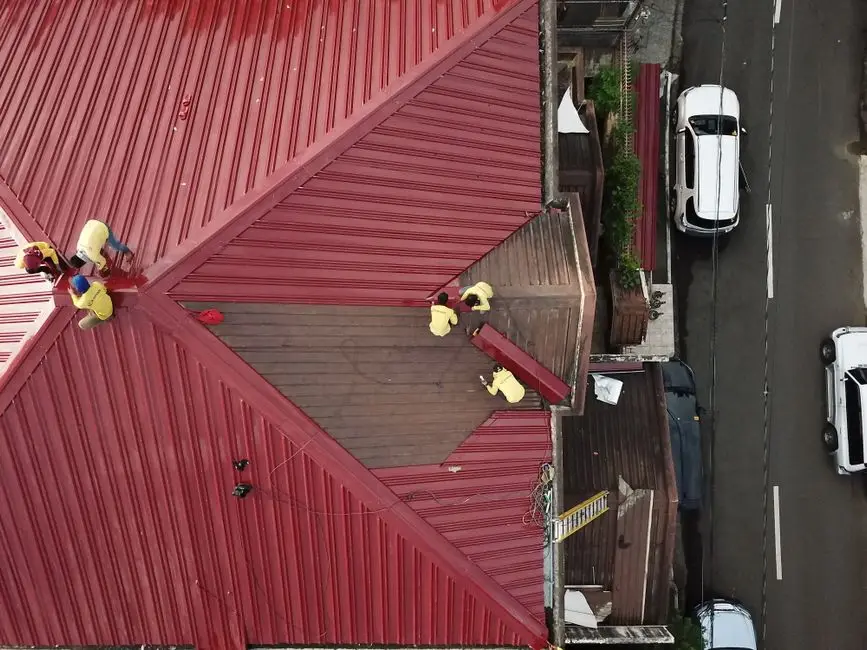
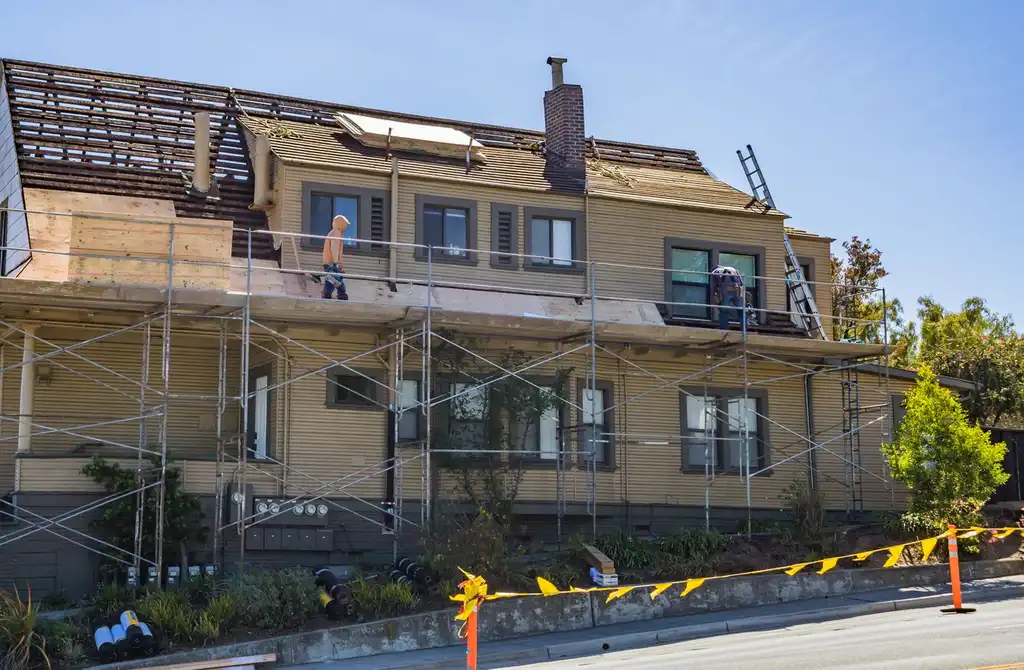
Water dripping from your ceiling after it rains means water is getting past your roof or a wall penetration and running down into the attic or wall cavity until it finds a way out through your ceiling. In San Marino, Texas, that is almost always a roof leak, not a plumbing problem, because the drip only shows up during or right after rain. The rest of this post walks through the specific causes we see on San Marino roofs, what to do in the first hour, what repairs cost in 2026, and when it is worth calling us instead of climbing up there yourself.
Why water starts dripping from your ceiling after rain
Water dripping from your ceiling after rain in San Marino, Texas is a symptom, not the problem itself. The actual entry point is somewhere above your ceiling - on the roof surface, at a flashing detail, or around a penetration like a vent pipe or chimney - and the water then travels along framing, insulation, or the back of drywall before it drips out at the lowest point it can find.
That travel distance is why the drip on your ceiling is almost never directly under the leak. We have pulled wet insulation out of San Marino attics where the ceiling stain was 8 to 12 feet away from the actual roof breach. Chasing the drip instead of the source is the single most common reason homeowners waste a weekend on a repair that does not hold.
Roof leak diagnosis in San Marino starts with the roof, not the ceiling. We map the water path from the top down, then confirm it with a hose test on the suspect area.
The most common roof leaks that show up as ceiling drips
Roof leaks that cause ceiling drips in San Marino cluster into a handful of repeat offenders. Here is what we find on the majority of calls, roughly in order of frequency.
- Failed pipe boots and vent collars. The rubber boot around a plumbing vent pipe cracks after 8 to 12 years of Texas sun. Water runs straight down the pipe and into the attic.
- Chimney flashing. The metal flashing where the chimney meets the roof plane pulls away from the masonry as the house moves. A hard rain drives water right into that gap.
- Valley leaks. Where two roof planes meet, the valley carries a huge volume of water. If the valley flashing is rusted or the shingles are worn thin, water backs up under the courses.
- Skylight flashing. Skylights are the number one leak source on any roof that has one. The curb flashing and the seal around the glass both fail over time.
- Wind-driven rain at step flashing. On a sidewall, step flashing that has lifted or lost its counter-flashing lets water in sideways during a storm.
If your roof has a flat or low-slope section - common on additions and garages across San Marino - the leak is usually at a seam, a drain, or a penetration. Our Flat Roof Leak Repair in San Marino, Texas crew handles those with TPO and modified bitumen systems, and we pressure-test the seams before we close up.
Why the leak only shows up during heavy rain
Light rain often does not produce a drip because the water volume is too low to reach the ceiling. A 20-minute downpour pushes several hundred gallons across a typical San Marino roof, and that is when a small breach becomes a visible ceiling drip. If your ceiling only drips in big storms, the leak is real - it just has not had enough water to announce itself yet.
Is a ceiling drip always a roof leak in San Marino Texas?
Is a ceiling drip always a roof leak in San Marino Texas? No - but if the drip only appears during or within a few hours of rain, it is a roof leak more than 90% of the time. The exceptions are worth knowing so you do not pay for the wrong repair.
An HVAC condensate line that has clogged or disconnected will drip into a ceiling pan and show up as a ceiling stain, but it drips in dry weather too, usually in the afternoon when the system runs hardest. A supply line or drain line inside a second-floor wall can also drip through, but again, it does not care whether it is raining.
If the drip is tied to rain, treat it as a roof leak. If it is tied to the AC running or to using a specific fixture, call a plumber first. Our Roof Leak Detection in San Marino, Texas service includes a moisture-mapping step that tells you which one you are dealing with before anyone quotes a repair.
What should I do if my ceiling drips after rain in San Marino?
What should I do if my ceiling drips after rain in San Marino? Move furniture and electronics out of the way, put a bucket under the drip, and poke a small hole in the bulging paint or drywall so the water has somewhere to go. Trapped water spreads sideways across the ceiling and ruins a much larger area of drywall than the leak itself.
Then do these four things in order:
- Kill power to any ceiling fixture or outlet in the wet area at the breaker. Water and electricity in the same ceiling cavity is the one thing on this list that can hurt you.
- Take photos of the drip, the ceiling stain, and the roof area above it if you can see it safely from the ground.
- Do not climb on a wet roof. A wet asphalt shingle roof in San Marino is slick enough that even our technicians wait for a dry window or use fall protection.
- Call a roofer the same day. A ceiling leak that is left for a week turns into a mold problem, and mold remediation in this area runs $1,500 to $6,000 depending on how much drywall and insulation has to come out.
If the drip is heavy or the ceiling is sagging, that is an emergency. Our Emergency Roof Leak Repair in San Marino, Texas team can tarp the roof and stop the water from getting worse the same day.
How much does ceiling leak repair cost in San Marino TX?
How much does ceiling leak repair cost in San Marino TX? Typical 2026 pricing for the roof-side repair runs $350 to $1,200 for a single leak, and $150 to $400 for the interior drywall patch once the roof is dry. The roof repair is the part that matters - patching the ceiling without fixing the source just moves the stain six inches over.
What drives the price:
- Access and pitch. A steep two-story roof takes longer to work on safely than a single-story ranch.
- Material. A pipe boot replacement is a $350 to $550 job. A chimney flashing rebuild is $600 to $1,400. A valley repair with new metal is $500 to $1,100.
- How much got wet. If the sheathing or rafters are rotted, you are looking at decking repair on top of the leak fix.
- Whether it is the first leak or the fifth. A roof with five active leaks is usually telling you the whole system is at the end of its life, and a repair budget is better spent on replacement.
We quote the repair before we start, and the number does not change unless we open something up and find rot that was not visible from the roof. That happens on maybe one in ten San Marino jobs.
Common mistakes homeowners make with ceiling drips
Ceiling drips after rain in San Marino get made worse by a short list of predictable mistakes. We see all of these every storm season.
- Painting over the stain. Stain-blocking primer hides the evidence but not the water. The next rain brings it right back, usually bigger.
- Sealing the roof from the inside. Roof cement smeared on the underside of the sheathing does nothing. Water is coming from above.
- Caulking the wrong spot. A tube of roof sealant applied to the shingle above the ceiling stain almost never hits the actual breach, because the breach is uphill from the stain.
- Waiting for the next storm to confirm it. Every rain cycle adds moisture to the attic, and San Marino attics hit 130°F in summer, which is ideal for mold growth.
- Hiring the cheapest tarp job. A tarp that flaps loose in the next storm does more damage to shingles than the leak did.
The right move is to find the source once and fix it properly. Our Roof Leak Inspection in San Marino, Texas is a full attic-to-ridge inspection, not a five-minute glance from the driveway.
When to call a professional roofer
Call a professional roofer when the drip is tied to rain, when the ceiling is bulging or sagging, when you see dark staining spreading more than a foot, or when the leak comes back after a repair you already paid for. Those four situations cover almost every call we run in San Marino.
At Roof Leak repairer San Antonio, we handle the whole job: we find the leak, fix the roof, and confirm the ceiling stays dry through a hose test before we pack up. If you want a company that has spent years working on San Marino roofs - tile, shingle, flat, and metal - we are the crew to call. You can reach us at 210-939-5773.
Frequently Asked Questions
Why is water dripping from my ceiling after it rains in San Marino?
Water is getting past your roof or a wall penetration and running down through the attic until it finds a gap in your ceiling. In San Marino, the most common sources are failed pipe boots, chimney flashing, and valley leaks. The drip location is usually 8 to 12 feet downhill from the actual breach.
Is a ceiling drip always a roof leak in San Marino Texas?
No. If the drip only happens during or right after rain, it is a roof leak more than 90% of the time. If it happens when the AC runs or when you use a specific fixture, it is more likely a plumbing or condensate issue. A moisture map confirms which one you have.
What should I do if my ceiling drips after rain in San Marino?
Move valuables, put a bucket under the drip, and poke a small drain hole in any bulging paint so water does not spread. Kill power to fixtures in the wet area, then call a roofer the same day. Do not climb on a wet roof - it is slick and dangerous.
How much does ceiling leak repair cost in San Marino TX?
In 2026, typical roof-side repair runs $350 to $1,200 for a single leak. Interior drywall patching adds $150 to $400. Chimney flashing rebuilds and valley repairs sit at the higher end. Mold remediation, if you wait, starts around $1,500.
Get help with Roof Leak Repair in San Marino
A ceiling drip after rain will not fix itself, and every storm cycle makes the damage more expensive. Call Roof Leak repairer San Antonio at 210-939-5773 and we will find the source, fix the roof, and confirm your ceiling stays dry.